Showing posts with label review. Show all posts

Sunday, 31 August 2014

Something a bit different...

Here we are again. Here I go again apologising for not posting quite so frequently as I first thought I would. To be fair to myself though, I have read 3 novels in the past month that have had more than 500 pages. And I am 100 pages into another long one as well. So instead of writing three individual blogs, here I am throwing three of them at you in one go. And here comes another sorry. They aren't books that I pulled from the charity box, that's right you heard, books that have been out been out recently or in the past year. Look how I am treating you! Back to normal, charitable me soon though...

Round one goes to...

The Goldfinch by Donna Tartt

I always forget that I have a Kindle. I'm not the biggest fan of them, I really prefer the physicality of a book but I still have one. So when I was given the chance to read Donna Tartt's The Goldfinch for free (no it is not illegal don't worry), I jumped at the chance and thought why the hell not. The book has received huge attention recently, having picked up multiple awards, including the coveted Pulitzer Prize, as well as having the film rights for it purchased. So things are looking pretty good for Tartt at the moment.


Donna Tartt's impeccable third novel

I didn't really know too much about the novel when I first downloaded it. Tartt's third novel follows Theo Decker, a man who at the start we can already tell is an extremely troubled young man. The first 50 pages follow him as he is in Amsterdam scouring newspapers and the news for names he recognises. Then Tartt takes us right to the start of Theo's difficult childhood, where he loses his mother in a bomb blast in New York's Metropolitan museum, a blast he also gets caught up in and survives. Tartt injects an eerie emptiness in Theo from the outset, from the stumbling little boy lost in a wrecked museum, to walking through a room full of the dead (the living have been evacuated), there is a sense of something not being right in him from the outset. There is so much tradegy to come for young Theo including not having anyone to rely on except a school friend who he lost touch with.

Words cannot really do this book justice in my opinion, only the ones that Tartt has written so masterfully. There are so many brilliant and original characters, including my favourite Boris, whom Theo befriends when he eventually ends up living in Las Vegas' barren outskirts with his father. It is quite sad to read the lives of two boys who have been abandoned to grow up without any guidance. As they both head towards delinquency, there are flashes of things they are far to young to understand, including taking drugs, selling drugs and drinking copious amounts of vodka. These go onto affect them into there older years, where Tartt pulls them apart before throwing back together once they are older. But in typical Boris and Theo style, they manage to get themselves into more trouble.

Stunning painting, stunning novel.

The whole book also surrounds this image of The Goldfinch, an exquisite painting by Carel Fabritius, which Theo inadvertently takes from the scene of the explosion. It haunts him his whole life, and acts as a constant reminder of the tragedy of his youth and all that was taken from him. The enthralling climax to the book, taking place as it started in Amsterdam, will not disappoint. I won;t spoil it for you, but the painting, this thing that Theo doesn't let himself looks at and is constantly searched for by the art world, plays a central role to the entire ending. The last chapter was some of the best writing I have had the pleasure of reading all year. Please read this book, I couldn't put it down, well the Kindle down. 

The Goldfinch by Donna Tartt is published by Little, Brown in the UK. 

The Secret Place by Tana French

Round two today goes to Tana French's new novel The Secret Place. There has been much hype surrounding the release of the novel, including a brilliant campaign from Hodder and Stougton, carrying the slogan of the entire novel and what kicks off the action 'I know who killed him'. Set in a boarding school where not all the girls stay and no one stays at the weekends, a message posted on 'The Secret Place', basically a glorified pin board, re- ignites an old murder case. A boy was found on the grounds of the girls school, brutally murdered with a garden hoe but no culprit was ever found. A year on, a message is posted on The Secret Place with his photo and the slogan. Doesn't it sound like every school girls dream to have an outlet to put all of your and others secrets? A place to pin up all the gossip? I mean it is a bit Mean Girls, but I'm hardly complaining about that! 

The Secret Place- basically a bitchy pinboar

The two detectives who are put onto the investigation, one from cold cases who has an attachment to the girl who brings him the evidence, and the other a tough bitch who is the new girl from the murder investigation team. They are a slightly cliched, even acting out the whole bad cop, good cop stereotype. But French makes it work, giving the teenage girls someone to stand up to and someone to feel like they have power over. I mean it bloody works in the novel... the girls can't stop dropping new information that was never revealed a year ago.

A bit too Mean Girls?

The main culprits for the murder come down to two sets of girls, all of whom are supposed best friends, and they totally hate each other. French has that bitchy girl tone down to a t, I can't help but think she probably has or has had a teenage girl at some point in her life. But the naivety of the girls actions shines through, their reliance on boys and their appearances never falters. French has written such believable characters all of whom have traits that make them all different from each other. Sometimes it is hard to see differences in girls nowadays, but French brings them all to the forefront.

I have to say, it was very difficult to put this book down. The story takes place over the course of one day and in that day we learn about the entire case, new evidence not previously known and by the 10pm, we even know who did it. I didn't care for the detectives much, but the setting is perfect, there is always a sense that the detectives are being watched, whether it be distant parents, prying teenage girls or the stern mistress. Well done Tana French, well done for making me interested in crime fiction again.

The Secret Place by Tana French is published by Hodder and  Stoughton in the UK.

The Cuckoo's Calling by Robert Galbraith (a.k.a. J.K Rowling)

The third and final round today goes to The Cuckoo's Calling. Now this book hardly gained any attention until it was revealed that it was actually written by J.K Rowling. I find that quite sad really. But hey that is the world we live in. When it eventually came out, sales figures rose by a massive 500%, and it confused me as to why she bothered. I know she wants to change direction and not get pigeon holed as that woman who wrote Harry Potter, but I think that's a badge she can never lose. Stick to your name love, it clearly sells better. 

A.K.A J.K Rowling

The Cuckoo's Calling marks yet another departure for Rowling as she moves on from young adult fiction from Harry Potter, to contemporary drama with The Casual Vacancy, to crime drama in her latest offerings (she has written a second after this one called The Silkworm). Set at a failing detective agency, the novel opens with new temp Robin starting a new job, fulfilling a childhood dream. With a weeks' work with Coromon Strike, the ex- military man turned private detective, Robin goes into her new job rather looking forward to it. She hardly has her expectations met when her boss, a man who sleeps in his office and receives constant death threats, is the private detective at hand.

The case that makes up the plot for Rowling's first venture into crime surrounds that of the apparent suicide of a supermodel called Luna. Coromon is hired by her step brother John Bristow to re- investigate, as he thinks a murder has taken place. Everything points to suicide, that is until Coromon begins to dig deeper and deeper, going over everything again and interviewing everyone involved. It can become quite tiresome reading endless question and answer, and Rowling slips into this repetitive structure every now and then. She has is obssessed with racial stereotypes it seems. I said the same about The Casual Vacancy. It just feels awkward J.K.

Better luck next time for crime writing?

I can't quite put my finger on what I didn't really enjoy about this novel. But I really didn't. I was trying to give it the benefit of the doubt but there is just far too many cliches in it for me. From the gay fashioner designer, to the supermodel who likes to party and has a loser boyfriend or the poor black birth mother who lives in Hackney, there is something that doesn't read write about it. I get it is her first stab at a crime novel, and of course there s plenty of dramatic and entertaining moments, but I found all of the characters annoying and much of the structure the same. If you like your crime fiction, then it is perfect for you. It has everything you need. It has murder. Lies. Red herrings. Dead endings, Christ it even has the cliched ending of the big reveal, and even the overdone meeting between murderer and detective to the end the whole thing. I get what you are trying to do Robert or J.K or whoever the hell you are, and it was a nice first try. But it just didn't do much for me. Maybe it's just me, but I wasn't a fan. I'll give The Silkworm a go at some point to see if the writing has improved, but for now, thank you J.K, thank you for making me lose interest in crime. Again. 

The Cuckoo's Calling by Robert Galbraith is published by Sphere, an imprint of Little, Brown in the UK. 


So there you go. Three very different books, but all brilliant in their own ways. For me I would pick The Goldfinch as the stand out book, I was still thinking about it for days after. But then the two crime novels also have their own methods of entertainment. The Secret Place is pure entertainment but not stupid and over the top murder, just plain, simple girl power becoming too much. 


Sunday, 27 July 2014

The Puppet Boy Of Warsaw by Eva Weaver

I really don't like to read books that involve the Holocaust and the second world war, mostly because of their depressing nature, but also because I always think just how many more ways are there looking at it? Are there any other ways that highlight the devastation that was caused? With everything that is happening in Gaza at the moment as well, where the Israeli military and government are continuing to bomb Gaza and Hamas, war is slowly coming to the forefront of every news channel and newspaper.

So for taking all this into consideration, I think this is what attracted me to read this book. To remind myself of the devastation that the Jewish population suffered in WW2, and to try and see if the novel made me look at the war at yet another angle. The book is split into two different time periods where the protagonist is Mika, a Jewish boy in the war in the 1940s and a grandfather telling his story to his now grandson in 2009. If you are educated in all of the facts of the war, then you always feel that impending sense of terror that is beckoning on the Jewish population of Warsaw. And it is not long until Weaver throws us straight into the terror of the Warsaw ghettos, when the Jews were all placed into one area of Warsaw, a space that was far too cramped for the amount of people forced to live there. Weaver cleverly purveys this sense of cramped conditions by letting a lot of the action spill out onto the streets, where all the evil is happening, where all the killing is occurring and where everyone is slowly starving.


Mika soon inherits his grandfathers coat that has a complex pattern of inner pockets allowing him to hide things inside them. This includes his grandfathers puppets and Mika soon becomes enthralled by them, making his own puppets and then slowly his own shows. More people are forced to move into his and his mothers flat, meaning he now rarely has time to himself. We follow Mika putting on shows for chilrdens hopsitals, orphanages as well as birthday parties. Soon his shows attract Nazi attention and he is made to put on shows, forced to down pints of beer and become part of the rough and manly culture. He soon befriends a soldier called Max, but there is such an air of tension between the two that Weaver subtly writes into it that is makes you always feel a sense of danger for Mika, a sense that Max is always just doing what he is told by his Nazi superiors.

The rest of Mika's journey during the war is much as would expect, full of death, full of loss and full of a fight that you never really think they will win. But of course, eventually the allies do win, he is given the chance for freedom, we already know at the start of the book he has made it to the USA. He is one of the lucky ones. There are some truly heart wrenching moments in the book with Mika, especially for me when the Nazis are making a film about life in the ghetto and they make Mika perform one of his shows. To pretend that life is all dandy in the ghettos, when really all the weak ones are being killed off before all the strong ones are shipped off to concentration camps. I got so mad reading it, why did no one help the Jewish people at the time? And then reading the current news straight after, how can a mainly Jewish population in Israel not understand what they are currently doing? I just don't get it.


Images from the Warsaw ghetto

One side of the book that really worked for me was when the book looks at life after the war for Max, the German soldier. Sent off to a prison in Siberia, we follow his complex journey and inner thought processes. Why are the German soldiers taking all the punishments when they were just following orders from people who have gotten away with it? It is an extremely debatable and hard to determine subject that it is almost too hard to call. Should the soldiers have been so severely punished for merely carrying out orders? When you read everything Mika saw and heard, it is hard to reason with Max and his comrades. But his journey for me was all the more fascinating as I have never really thought about what German soldiers went through after the war. All the lies they were fed for no reason, for no purpose. Truly devastating on any sole.

Just some of the three million German POWs in USSR

I apologise for the somber tone to this review. It's just the subject matter at hand. And the topical nature of war at the moment across the world doesn't help. I realise that WW2 and the Gaza/Israeli bombings are two totally different situations, but can people not learn from past situations? From situations that didn't even happen that long ago? From situations that people who are alive today were alive back then? The sheer ignorance of those in power will sometimes never cease to amaze me.

The Puppet Boy Of Warsaw by Eva Waver is published by Phoenix, an imprint of Orion books, in the UK. 

Tuesday, 22 July 2014

The Casual Vacancy by J.K Rowling

Well I am just disgusted in myself and how long it has been since I have decided to sit down and write one of these things. Can I just defend myself before you hit that big red cross in the top right- hand corner? I HAVE BEEN ON HOLIDAY. As well as being particularly busy with fascinating things including recovering from tonsilitus, spending some much needed time in the sun and getting a new phone. Riveting right? Now in the past 6 weeks, I don't want you to think that my self proclaimed title of official book worm has been lost. Oh no. Train journeys have still be filled with the written word. So brace yourself people. Reviews will be coming at you thick and fast from now on. Whilst I may try and do some catching up on ones I have finished, I may just start from now... I'm still fickle, I'll let you know.

SO in my own style of writing things late, why not give you a review for a book that has been out for quite sometime now? In it's own streak of luck however, J.K Rowling has recently been back in the spotlight, what with her new crime novel being published, as well as finding time to squeeze out a Harry Potter short story. I have not read this, sorry J.K but you must be JOKING if I am signing up to Pottermore just to read it. So this review will focus on her first, well lets say probably first published attempt at an adult novel, The Casual Vacancy.


Now if you are as ignorant as I am, you may think that this is a book about either casual sex or a empty hotel  room somewhere in the depths of England. However, you will soon learn, and I mean literally in the first ten or so pages, so this doesn't spoil it, that it for a seat on a local council that has become available after the death of Barry Fairbrother. The town of Pagford soon descends into a state of shock, and we are presented with a multitude of characters immediately, giving the book a soap opera sense of direction. And this does not relent. Rowling does exceed fantastically at chopping and changing scenes in the local town and its surrounding area. We all already knew she had a knack for telling a story, it was just the way she went about it that was sometimes troublesome and at times extremely immature. But this has greatly improved. Gone are the unnecessary adverbs and adjectives, and visible is a sense of a writer who feels much more in her stride.

Do you even need a picture? 

Now this isn't perfect. There are times where, to me, it felt like she was trying a little to hard to reach her mature audience. Some mentions of words like vulva and her sometimes graphic sexual thoughts were misplaced and misjudged. There are times also I feel stereotypes are coming into play slightly, whether it be the troubled teenager Krystal Weedon who is so clichéd it is cringe-worthy, or the pushy Asian parents who bully their children for underachieving, Rowling sometimes slips into boring and unimaginative territory.

But she manages to save it with the other characters. She mixes so well the lives of the people in the small town and displays brilliantly each of the characters internal and family catastrophes. They may all seem like small problems, but if someone thinks it is a problem, then that's all that should matter. Characters including the married cougar Samantha who prays on young schoolboys and boyband members and Maureen who runs a local deli and café with the head of the council Miles, who may or may not have had part of his anatomy somewhere it shouldn't have been, all kept my unrivaled interest, even when a good looking man was standing in front of me on the train. The best character for me was the troubled father and headteacher Colin Wall, who was petrified of even brushing up against his students for fear he would enjoy it too much (if you get me). The sheer panic Rowling has instilled into him almost drips off the page.


All of these domestic issues rotate around the election for the seat, as two sides battle it out to save the Fields, a council estate area that sits on the border. Some want it out of the borderline and some want to keep it. It even starts effecting the teenagers of the local area, as parents run for the seat and they become terrified of what could happen, even meddling with the council website to stop people getting in. What Rowling does so well is to explore each issue in a way that it effects not just one person but everyone around them, truly evident in the run up to the end of the novel where I could simply not put the book down. I wont ruin it for you, but it sure does put many things in perspective for Pagford's residents and Rowling ends it on an extremely bittersweet note.

Now I was extremely cautious about this book. I mean I enjoyed the Potter books as much as the next kid in my generation, but I wasn't the biggest fan. But Rowling surpassed my expectations. Whilst it wasn't perfect and there were a few try hard moments, she writes with an authenticity that has captured modern life in rural towns where urban life is starting to infiltrate, whether it is elder people using the internet, council estates on your doorstep or a multi- cultural community, you get the feeling that things are changing and life for the residents can simply not go on as it has done in the past. A TV series has already been commissioned for the book and I can't help but feel that simply because of the author who penned it, this is why it is going into production. I just don't see it working on screen, it will be far to soap opera-esque. It may prove me wrong, at the end of the day I'm just a poor boy from a poor... Oh wait that's wrong. But you know what I mean.

The Casual Vacancy by J.K Rowling is published by Little, Brown in the UK. 

Sunday, 1 June 2014

The Sorrows Of An American by Siri Hustvedt

Well it has been quite awhile since I sat down and wrote one of these. Life has been rather busy and not overly fantastic in the past couple of weeks. But the sun is out and it's time to review again. I can hear you all cheering in the stands. Please, please I am not worthy. I have realised how this blog can sometimes be a mix of me telling you about my life as well as reviewing books. I'm thinking maybe I'll change the description a bit, so as not to lure you book fans into a false sense of security... SO on with the review.

I am going to put this out there from the outset, I think this book goes into my top five favourite books of all time. I couldn't put it down and I truly loved it. I have always been a massive fan of American literature, especially the classics like In Cold Blood and Tender Is The Night. Even though this was released in the 2000s, it felt like it was written in that 1900s era, minus the use of aeroplanes and mobiles phones of course.


The Sorrows Of An American follows Erik Davidsen, a psychiatrist who is struggling to cope with lonliness, his new tenant as well as his complex family. Having recently divorced from his wife, Erik struggles to deal with being lonely, slipping into the typical male mind set of fantasising  about women. It is quite hard to describe this plot and do it justice, but reading it is a completely different story. Hustvedt writes with such ease and beauty that demonstrates the weaknesses of the human mind set, that the plot fades into the background as we become enamored with the thought processes in all of Erik situations, be it the family side, his relationships or his relationship with his new flatmate Miranda.

There are some great moments to do with his job too, when we get an insight into his patients and how they end up effecting him at a low point for Erik. But it the issues with his family that eventually take precedence, as him and his sister discover a letter from their recently deceased father and they go on the trail for discovering the lady at the centre of the content of the letter. It goes onto effect their relationship with their mother, each other and even other relationships. There is so much plot that I can't even go into detail about with confusing you, but Hustvedt handles it with such care and attention, you are never confused and always wanting more.

Considering that it is written by a female author, Siri Hustvedt sure does know how to get into the male psyche. She has for sure written in some of her own life into the book, crossing over the Norwegian family living in America, so bringing a real authenticity to the book. The images of their father during the war through his diary entries is also truly touching. It is not often I am moved by a book, but I couldn't help be by this beautiful book. I think even just writing this review has moved it up into my second favourite book of all time. There I said it. I apologise for the brief review, but I just don't think I can do it proper justice. The beauty is in the words.

The Sorrows Of An American by Siri Hustvedt is published by Sceptre, an imprint of Hodder and Stoughton in the UK. 

Sunday, 6 April 2014

The Fields by Kevin Mahar

The Fields opens in Dublin during the 80s and we find Jim Finnegan as our protagonist. He is only 13-years-old and we are immediately thrown into his innocent world, joining him and his best mate on cycle trips. There is an instant enthusiasm from Jim as learn about his family, including 5 sisters, his distant father and typically Irish, gossipy (is that a word?) mother. They are an extremely varied bunch, all with their own traits, but slowly fade into the background as we explore Jim's character more and more.


We soon begin to learn that Jim isn't as straight forward as we first think. The innocence still remains in his voice throughout the novel, but his actions start to become more and more erratic. This all escalates in him eventually stealing someone's girlfriend, whose name is so Irish I'm not even going to attempt to type it let alone say it. There are some very uncomfortable scenes with her, as learn about them passionately kissing, bearing in mind he is only 14 by this time. Kissing very soon leads to more (I'm not going to spell this out for you), and for me the uncomfortable feeling just continued here. The way that Mahar has told it through Jim's childish voice just doesn't make it sound right, and maybe that was what he was trying to get at. But for me, the feeling of complete gross out never left me in these scenes.

Now the front cover of the novel promised a heart warming and laugh out loud story. I'm not sure these are quite the words to describe this novel, especially when Jim becomes an altar boy and a priest starts to take an unhealthy, and very illegal interest in him. These scenes of rape, again told through Jim's innocent eyes really put me on edge. I've always been funny with the power of religion, and the fact that the priest continues to blame Jim for what the rape he is committing, just adds to the tension that I felt reading it. I was so on edge, people on the train must have thought I was feeling a tad ill. But it is important to hear these stories, as well know to well the stories of abuse that come out of the church.

Jim's relationship continues during this time, and there are so many opportunities for him to tell someone, it almost starts to become annoying. But then we must remember he is only a child, but the sheer honesty and naivety of the story telling makes it the more real, and we soon realise he is powerless to tell anyone. Who would believe him over the highly regarded local priest?

The story soon moves onto London where Jim and his girlfriend have traveled in order for her to have an abortion. It made me extremely sad to see the lengths they had to go to in order to abort the foetus; Ireland has never exactly been tolerant of it. And it is when the story moves to London that the hit and miss novel really falls apart for me. It just seemed a bit ridiculous, whether it was the 15 year old Jim working in a bar with a lot of gay men (who by the way beat up the priest when he visits Jim in London- creepy- and you can't help but smile), or the spiritual classes he attends where they teach people to heal, it doesn't ever feel right for me.

So for a novel that I was expecting to laugh out loud to (I refuse to put that abbreviation here), I was highly disappointed. There are some lovely moments between Jim and his family, but these are heavily taken away from when there is too much focus on the spiritual healing, and the details that just seem too far fetched, and doesn't seem realistic enough. This is such a shame for a book that deals with hugely modern issues such as the abuse that children suffer and the poor sex education they are giving. But Mahar does achieve one thing; finding a suitable voice to innocently present these issues and make them seem to much worse because of it.

The Fields is published by Abacus, an imprint of Little, Brown books in the UK. 

Tuesday, 25 March 2014

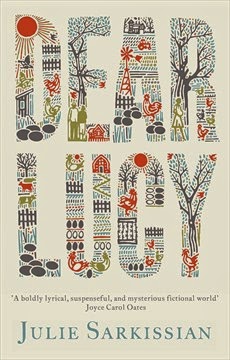
Dear Lucy by Julia Sarkissian and If You Find Me by Emily Murdoch

A real treat for you this week as I will be reviewing the latest two books I've read together. Yes a double whammy of books to read! Too much I hear you scream? Well fear not. I have not just lumped any random two books together. Both of these books I'm about to talk about deal with very similar issues. Whilst they are aimed at different audiences, they are both harrowing stories involving the plights of young girls and women, both with hugely varying effects...

Sometimes I just can't plan these things. But I happened to put these books next to each other without really knowing the real issues that both of the books dealt with. Oh well worked out well for me! I feel a little bit like I am back at university comparing two novels, but do not worry, there will be not a Harvard reference insight.

Dear Lucy, the first of our two female led novels, is told from the perspective of three different women, all at various stages of their life. The main character revolves around Lucy, or Dear Lucy as her mother so affectionately calls her. It is clear from the outset that Lucy has a psychological condition. She seems to hear and see things that others don't, as well as being extremely aggressive towards people when they do not help her. This has led to her being thrown into living with the mysterious Mister and Missus, the latter of who makes up our second perspective, with the third being from Samantha, a girl who is also living with them. It is clear none of them are related. From the very start, the book put me on edge. It was very hard to like any of the characters, and being such strong females, I found it uneasy to relate to any of them. There is a constant sense that everything will be explained, and in dribs and drabs it slowly begins to form. But this takes time. An awfully long time.

The whole idea for the story is extremely unique, with the idea of Mister and Missus running some sort of halfway house for troublesome female children. Missus, whom we later find out can't have children so instead has adopted before, remains until the end far too unexplained and complex. With her back story of the death of her previous adopted child, along with her soon-to-be child courtesy of pregnant teenager Samantha, there is a deep sense of tragedy, but Sarkissian misses the mark with her. As for the other characters, Lucy's parts must be read slowly in order to follow her warped sense of being and thinking, and Samantha's typical tearaway teenager attitude, soon becomes tiresome. There are also some quite unbelievable and forced parts, especially the parts where Lucy roams around on her own talking to the chicken egg foetus (yes you read that right) she carries around in her pocket called Jennifer. Sarkissian, for me, doesn't quite make it sympathetic enough, instead giving Jennifer an annoying quality.

If You Find Me also features some strong female leads, except at a much younger age. At the time of reading it, I didn't even realise that the audience for the book is the young adult market. It was written with such a maturity, and dealt with such serious issues that I didn't even cotton onto the intended audience. The book is told from the viewpoint of Carey, a 15-year- old girl who, at the start of the novel, is fond living in a camper van in the middle of an American National Park with her younger sister. Abandoned by their drug addicted mother for sporadic periods of time, the mother has finally written to the social services who go, along with Carey's father, to discover them in squalid conditions.

At first, Carey is very distrusting of the outsiders, as anyone of her young age would. This is added to even more once we begin to learn details of just exactly her and her half- sister have been through. Having been taken away before she could remember many things, Carey has been raised in a life full of her mothers' lies. Murdoch so well captures this innocence of a teenage girl, as well as her mute half- sister Jenessa. Murdoch plays with dangerous territory when she almost slips into a high school novel when the two girls start school, but manages to keep the serious tone when Carey finally admits to a tragic, yet necessary crime that has been haunting her.

There are so many poignant moments in the book that made my heartache. Having to read the passages about Carey's being used so disgustingly by her mother made me wince, and it is no wonder why her little sister is so scarred she hardly talks. But the story develops into something we all want. Hope. Family. Comfort. It may have been interesting to eventually hear from the mother again, but she is never seen in the present throughout the novels. But this is one very small flaw in Murdoch's brilliant novel.

Whilst I may not have been the target audience for either novel, I found myself looking at both extremely differently. Both deal with terrible situations, as well as coming from almost completely female voices, but even though they are for different audiences, the writing of both is so complex and subtly interwoven into all the tenses, that I eventually enjoyed both. I did struggle with Dear Lucy for awhile, but I didn't put it down, meaning deep, deep down I liked it enough to finish it. The characters are extremely intriguing. As for If You Find Me, I truly sympathised with Carey and Jenessa throughout. Whilst sometimes Murdoch may drag out the transition period for the two girls, it is only realistic that it takes so much time for them to even start to feel comfortable in a normal family environment. I felt guilty, I felt sad, I felt hope. I highly recommend both books if you enjoy books with strong, female roles, dealing with moments in their life that none of them will want to look back on.

Dear Lucy by Julie Sarkissian is published by Hodder and Stoughton in the UK.

If You Find Me by Emily Murdoch is published by Indigo, an imprint of Orion Books in the UK. 

Sunday, 16 March 2014

When Did You See Her Last? by Lemony Snicket

Lemony Snicket is one of those authors who just screams childhood to me. When I was in my younger years, and everyday that is getting further and further away, Snicket was my favourite author. Forget J.K Rowling, Snicket's books were much more my thing. I think I preferred the realism and the sarcasm that he wrote with. I saved up every year to by the latest book in his A Series Of Unfortunate Events series and enjoyed every one of them. Except the last one. What a terrible book that was. It completely ruined the entire series for me, as well as feigning my interest in Snicket. But I will always be thankful for him. He made my interest in reading continue as a young adult, and was the best transition to have from young adult books to the adult world.

A Series Of Unfortunate Events...my childhood in a picture

So due to my feigning interest as I put it, I stopped following him completely. Imagine my delight then to see when I traipsing through another charity box to find a book by him. Seeing his name made me instantly think about laying in bed late (when I should have been asleep) delving into the latest in his prior series. I mean of course I realise I am an adult now, but after reading such a depressing series of books, I decided a bit of nostalgia was highly necessary this week.

Now due the nature of the charity box, I often get stuck reading the second in a series of books, waiting and waiting to get my hands on the first in the series (if I ever get the chance). This is the case here I am afraid, but if I ever get the chance, I shall review book 1 in his brand new series of novels, All The Wrong Questions. Today's blog will look at the second in the series entitled When Did You See Her Last?. A bit of research to get some context due the lacking first novel, I was delighted to discover that Snicket's new series is a prequel to A Series Of Unfortunate Events.

Lemony's latest offering

Reading the first page immediately bought back memories of Snicket's style. The wit was there from the first page. The second novel in the series sees us following Snicket himself in a dying seaside town called Stain'd-by-the-Sea. His brilliance with using names was still there, already giving me a grim impression of this almost abandoned town. Snicket is an apprentice to a police detective investigating the disappearance of a local rich girl. His teacher thinks the case is easily solved, but as expected, Snicket is on the case to show there is so much more to the story. Playing someone of younger age, the characters in the new series do for me what the Baudelaire triplets did in A Series Of Unfortunate Events. They taught me to be intuitive, bright, confident and know that adults aren't always right as they grow up.

Now I don't want to give too much plot away here, but it is typical Snicket. Full of twists and turns, as well as the moments where you think everything is finally going to plan for a spanner to be thrown in the words. It is so comforting to know that there is still a lot of intelligent and witty fiction out there for children, and not just sticker books with One Direction's face on. There were a few parts I didn't quite understand, such as what age Snicket is supposed to be in the novel, but I'm sure all would become clear with the first book. as many of the characters are children in the book, as an adult it was easy to see their innocence and disillusion. But as is typical for Snicket, he gives children a chance to fight for change, even in his sometimes surreal world.

So even if you think you are too old to read him now, don't knock it until you've tried it. There are still plenty of adult themes within the novel, including murder, kidnapping and deception. I couldn't help but feel that it is all building up to an exciting conclusion. Buy this book, even if not for your child or a child you know, buy it for yourself. Snicket hasn't lost it. It may even rouse a child's interest in his previous fiction, something I think was so very important! And to keep my interest as an adult? Well my version of an adult, is something pretty special.

When Did You See Her Last? (book 2 in the All The Wrong Questions series) is published by Little, Brown in the UK. 

Monday, 10 March 2014

The Reader by Bernhard Schlink

Look at me. Sticking to my promises! Here is my second review in as many days (and get ready for number three tomorrow).

It only occurs to me as I type this in the semi- darkness of my room hunched over my laptop what depressing subjects the books deal with that I have been reading lately. If you care enough to scroll down, you will see my review of The Invention Of Wings, which dealt with the issue of slavery. Tonight's review involves the Holocaust and the Second World War. Such happy, uplifting topics. But as I said yesterday with slavery, it is vitally important people write about these topics so we never forget the suffering that people had to suffer.


I already knew about the story of The Reader having watched the film adaptation of the novels a few years back. But I always find that the original text of any adaptation has an extra spark and atmosphere about it. So as soon as I put this at the bottom of my to read pile, I was looking forward to it. As it is a translated text, I do worry sometimes if something is lost in the English version, but I can't say I even noticed that it was originally written in English.

Kate Winslet in the film adaptation

The Reader is written from the perspective of a 15-year-old boy called Michael Berg. We as the reader (please ignore the intended pun) are thrown straight into the dramatic tension throughout when he runs into Hanna Schmidt when he is taken ill. He later goes back to thank her once he is better. As with many things, one thing leads to another. And so begins their affair. I should just add here how there is a huge age difference between them. So not your typical summer affair story.

Schlink writes with such craft about how they fall into a daily routine of sleeping together, bathing each other and then Michael reading to the illiterate Hanna. This illiteracy later comes to play a vital role in the novel when Hanna is taken to court for her SS past. Obviously back then illiteracy was much more common, but it is scary how in the Western wold, there were still and still are today people who could not even read or write. That means people who can't read and learn about history the way that we can; reading novels such as this.

The novel follows Michael as he grows up, and how their affair effects him at every stage of his life. There is a constant sense of heartbreak throughout, something Schlink seamlessly writes into Michael's narrative. He can't seem to let go of Hanna, she herself being an extremely complex, distant and cold character. But with her background, you could hardly blame her for being as she is. This runs right up to the end, where she eventually kills herself when she is due to be released from prison. In a way, despite being quite an unlikable character, you do feel sympathy for her by the end.

Bernhard Schlink

And of course there is the serious issue of the Holocaust. Schlink brings a new angle to looking at the terrible slaughtering that occurred by looking at the convictions, and personally for me, experiencing looking into the violence of female soldiers running worker camps. I found it extremely uncomfortable to read, especially when she seems to be just as callous throughout, in the way she treats Michael included. The Holocaust is never an easy subject to read about, but Schlink manages such a matter of fact style about it, it makes it that little more horrific. And not just because of the act that Hanna has committed during the war.

Whilst it could be easy to sympathise with Hanna's character due to her illiteracy, her coolness and shrewd attitude give The Reader an air of depression. But I couldn't put it down. Michael's narrative and attachment to Hanna at his young age, along with the constant reminders of the tragedies that have occurred, all bring to the forefront the history of Germany, and how it has effected generations after.

The Reader is published by various publishers. The version I read (above) is published by Orion Books. 

Sunday, 9 March 2014

The Invention Of Wings by Sue Monk Kidd

Now life has been rather busy for the past few weeks. Not that that has stopped me from reading plenty of books mind... I have just become incredibly lazy with writing reviews. But I'm catching up now. So I've already shattered any illusions you may have that I have read a book a day as I will be uploading quite a few reviews this week. I am ashamed for getting so behind! Ahh life...


Last year I read Sue Monk Kidd's first novel The Secret Life Of Bees and thoroughly enjoyed it. The huge best seller was a thrilling look into black oppression in the 1960s and Kidd continues to look at black oppression in her latest novel The Invention Of Wings. We are transported back to the beginning of the 1800s, when slavery was rife in the USA in many areas. Told through a dual narrative from the two main characters, Sarah Gimké, daughter of rich family who own many slaves, and Handful or Hetty, a slave of equal age. Kidd uses this to give us both sides of the story, the guilt that Sarah begins to feel about how er family are slave owners, and Handful's traumatic accounts of slavery from a first hand point of view. Handful is presented to Sarah as a gift on her 10th birthday, immediately bringing to the forefront the sheer ownership that the white population of the time took.


Now this year has seen more spotlight heaped onto the issue of slavery as the success of the film 12 Years A Slave has highlighted the importance of telling these tales of slavery still is. Steve McQueen has said many a time how there are millions still in slavery conditions, a shocking fact that needs to be dealt with radically and quickly. And novels such as Kidd's are equally just as important at reminding everyone of the horrors of slavery, ensuring we never forger how badly we have treated others in the past.

The novel itself is split into different time periods, as we track the two girls growing up, growing closer and growing into women. It was extremely readable but it may have been interesting to hear from some of the other characters in the novel. There are some voices that need a little more detailing, not avoiding the danger of telling a story through just two opinions. There are so many characters that intrigue through Sarah and Handful's narratives that would have been just as fascinating to hear from. Whether it be Handful's runaway mother, constantly stealing things from the white household, or Denmark Vesey, a free slave leading the revolution, or even Sarah's stern mother. So many horrid events occur throughout the novel, whippings, hangings and even something I had never come across before, tying a slave's leg to their neck behind them, choking them if they dare to move. These need the voices of the people who suffered them. Although it is traumatic enough from Handful and Sarah, a little more perspective would have added to it. However, there are some extremely saddening moments from Handful, especially her delight at how much she is commercially valued at by her owner. It should never be how much someone is worth to be sold to make them happy.

Aside from this, I cannot fault this novel. It is certainly a page turner and doesn't get caught up in unnecessary details. The skips in time help to keep it fresh throughout as well, as we get to learn what we have missed in the time that has passed. The thing that I loved about the novel was how it eradicated any stereotype that women did nothing at the time to put a stop to the the evil that was happening around them, much like Patsy from 12 Years A Slave. And imagine my delight when I discovered at the end of the novel, Kidd telling in her author notes that Sarah Gimké was a real- life abolitionist. I don't know where my own stereotype  of this comes from, seeing men argue over whether slavery was right or wrong, as if there ever should have been a question.

Sarah Gimké- remember that name folks

So whilst Sue Monk Kidd may have done good in again not letting us forget about the horrors of slavery, for me she has made me learn about the life of Sarah Gimké, and helped to make me that little less ignorant. It is important that historical figures such as Sarah are more commonly known because I have never heard of her before reading this novel. Kidd so well merges the historical fact with her own flowing fiction, something that is rare to find in today's world. I can only hope a film is made to bring Sarah's story to an even greater audience.

Another review tomorrow folks!


The Invention Of Wings is published by Headline books in the UK. 

Sunday, 23 February 2014

The Rum Diary by Hunter S. Thompson

Another one of those names that gets tossed around in the 'classics' group for you this week in the form of Hunter S. Thompson. Having never read any work by him before, I was quite excited to come across this in the charity box at the end of the last year (yes I know it's taken me awhile to get there!). I have to say mind it was one of the best charity boxes that we have got so far. It was literally full to the brim of classics, be it Penguin classics or other titles I have been hearing about for years and years. In there even was my favourite novel, In Cold Blood by Truman Capote. 

The Rum Diary... he was quite dishy when he was younger....

Being as naive as I can be sometimes about novels and their authors, I presumed that The Rum Diary would be another one of Thompson's novels based upon his investigative journalism ways. I was mistaken however on researching the book a little before I began reading it. Whilst Thompson did live in Puerto Rico and work there as a journalist for a paper, most of the characters and plotlines were fictional. I am a huge fan of journalism books, as I said about 5 lines ago, Truman Capote's In Cold Blood is my absolute favourite. Disappointed as I was, I thought it was time I should get around to reading one of Thompson's novels, so I pursued to turn to the first page.

After the first 10 pages, I was still quite not getting how it wasn't based completely on fact. It all seemed so real, the context, the sheer honesty of the main character Paul Kemp and the realness of the other lost male souls all felt so lifelike. I could picture them all in the stuffy, hot offices, drinking rum until they passed out and avoiding the locals on the way home. I truly respect any writer that drops me into a scene as a fly on the wall, happily watching as the action passes by. Thompson had done this within the first 10 pages for me,

Being quite a small novel, I was soon rattling my way through it. The pace of the novel never relents. I was never bored reading it, there was never a long description or tedious conversation throughout. Every single world set the scene and threw me straight in at the deep end with the action. Following the man character Paul Kemp as he moves to 1960s Puerto Rico to be a journalist. As with many books that I seem to be reading at the moment, there is a feeling of dread and impending doom throughout. And boy does it hit at the end. But I won't spoil it for you. 

....he didn't age well mind! 

Another feature of all the novels I seem to reading at the moment is how many of the male characters have a steady addiction to alcohol. But they all seem to find it so normal. Thompson casually references many periods of the characters drinking, whether it be at bars, hotels, in the office or even at a huge festival on a nearby island. He subtly links into this the loneliness and isolation of the male souls portrayed in the novel. It is quite sad to read about to many men who have literally been washed up on the shores of Puerto Rico men with dreams and hopes, only to have them crushed. And so comes the excessive consumption of rum. 

Whilst the life of the journalists seems all fun and games, and makes my life among many others seem rather boring, it is something that I find quite scary. Being washed up on a foreign shore full of dreams of the future in a sunny paradise only to find it is nothing like it is publicised is truly terrible. And to them only have rum to pass to help pass the time as the impending doom hits can never be a comfort. Thank goodness we have writers like Thompson to educate and document times like these so we can hopefully we avoid times of people being isolated and disconnected from the world. Unless you are Russian of course. 

A highly engaging read that you will finish from cover to cover in two days at the most, Thompson held my attention from start to finish. I could feel the scenes dripping of the page and I could picture it at every point. I can only hope my review of a masterpiece holds your attention for half as long. 

The Rum Diary is published by Bloomsbury in the UK, available on Amazon. 

Sunday, 16 February 2014

The Beautiful and Damned by F. Scott Fitzgerald

So a golden oldie for you this time! I should have said when I was making my new years' declaration that I need to get around to reading some more of what many refer to as 'literally classics'. Of course I have read some, but many escape me. I want to correct that. Fitzgerald is one of those names that gets thrown around in this category. I read Gatsby when that terrible, terrible Baz Luhrmann production was released. I really enjoyed it. I finished it in a day, not just because of its surprisingly short length but the sheer readability that Fitzgerald possessed. Unfortunately, this was around the time when I was finishing up multiple university assignments, so I never got around to reading anymore of his works.

Mr Fitzgerald himself

So last year, I found one of his novels in the latest charity box. I read Tender Is The Night at a strange time. Having only recently left university, I was finding it impossible to not read a book and try to critically analyse it at every stage. I guess you could call it a curse. Or else it just makes you look deeper into the themes that make a novel. The English graduates now for ever burden. Oh well. It'll wear off. Just think of it like when you first drive without an instructor. There you go. 

But anyway, we are here to talk about the book that I have just finished and returned on its journey to the next charity shop, entitled The Beautiful and Damned. I was shocked to discover that Fitzgerald in his life only wrote 4 complete novels, dying before he could finish his fifth one. I don't know why I assume that someone such as Fitzgerald who falls into that critically acclaimed classic category would have a huge catalogue of novels. I guess that just shows the impact that he had in such a short collect of full novels. Of course, the short story collection that he produced in his lifetime was a huge, broad selection. But I have never been a fan of short stories. They always leave me wanting more.

What striked me straight away about the book was the character names. I have never come across an author who thinks of the most brilliant names I have ever read. In previous books that I have read of his, who can forget the most brilliant name Dick Diver. What a name. Not anywhere would you find a name like that nowadays, he would never name it out of school. And that continues in The Beautiful and Damned characters such as Anthony Patch and Richard Caramel. Memorable, strong, distinctive, brilliant. And it's not just the names that are memorable. Each character, whether it is the tragic, hopelessly in love Dot, or the determined older character Adam Patch, each will leave an impression on you. 

Fitzgerald's second novel


He continues his flowing writing style and I found it hard to put the novel down. He has a way of describing a scene that I just would never think of, and I think is something rare to find in the literary world. The book follows the path of Anthony Patch, as he leads a lazy life of not working, and drinking and partying to an extreme excess with his wife Gloria. Fitzgerald writes in a period that both intrigues me and terrifies me. This society led culture that craves excess, extremity and lots and lots of liquor. But boy does he write about it well. You can feel the devastating effect that the lifestyle the two are leading are having not just on themselves, nut on their relationships with others as well as their deteriorating living conditions. 

 This feeling of devastation just does not relent throughout. Everything has an air of depression around it, with this constant reliance on the importance of liquor adding to this at every stage.  The plot eventually centres around Anthony and Gloria's fall from grace as they wait for a court case to be settled over inheritance that was taken away from them by Anthony's rich grandfather. There is always a sense of the inevitable throughout, that they will win the case, as the couple are always on the edge of no return but never quite. But I must say, it was hard not to want then to fall. The unlikable Anthony and Gloria always seem to get there way, and in the end do, despite all the suffering, which for most people would barely be scratching the surface of being poor. 

Fitzgerald fully deserves his title of being a classic literary author. For me, there is no one out there who can match the fluidity of his writing, his unique description or his tragic, unlikable characters. Whilst I usually struggle to get on with a book where none of the characters I particularly care for, I make the exception here. Fitzgerald was truly a master, and for me, this was his greatest work. Of course this may change when I get around to reading those short stories. Or that last novel of his I have left.

The Beautiful and Damned is published by many different publishing houses in the UK due its being out of copyright. The copy I read (pictured above) is publishing by Orion Books. 

Tuesday, 11 February 2014

Maid Of The Mist: The Myth, The Mob and The Mozzarella by Colin Bateman

Apologies for the delay. I have been rather lazy this week and only jut got around to actually finishing a book, very rare for me to take more than a week to read one! Unless it is huge. With many, many pages. Or tiny, tiny print. I'm like an old woman. Anyway, back to the review.

So this week I read a book by a man who has recently become one of my favourite authors. Colin Bateman, or Bateman as he mostly goes by, is famous for writing the book that spawned Murphy's Law. He has written a load of books which I am slowly working my way through ever since reading one of his novels called The Prisoner Of Nurse Brenda. I nearly wet myself several times on the train it was so funny. Believe me, that wouldn't be a good look. Although I guess most commuters wouldn't even notice. Many have that vacant 'get me off this train' look. Dammit, got distracted. ANYWAY.

Maid Of The Mist. Beautiful cover designs.


As I was saying, I have read many of his novels and have found them all mostly hilarious. There are a couple of them that have been a bit hit and miss, but mostly they have been fantastic. Colin Bateman has a fantastic way with words. I have never read an author so brilliant at comic timing, as well as using his sarcastic tone to fine effect, even when the situation really doesn't call for it. There have been a couple of times I have had to suppress a laugh, which again, is not something I want to be seen doing on the train...

The first thing that always strikes me about his books is the wonderful cover artwork that can be found on the latest editions from the publishers. Credit to James Edgar. I've put a few more of his beautiful covers below for you all to marvel at (and then go and read them okay they are all engrossing reads).


Some more great artwork by James Edgar

So once you've stopped staring at the covers, you get through to the book, the one being in question Maid Of The Mist. The book centres on Frank Corrigan, an ex- Irish policeman who has moved to Niagra, the town not the waterfall before you ask, to lead a quieter life. Cue the opposite of this taking effect. Most of Bateman's books that I have read so far feature tragic male leads, mostly Irish, with plenty of mention of the Troubles throughout. This continues, and although if you read a few of his books in succession, these themes could get old, you would be surprised how each time a new angle is drawn upon it.

Typical Bateman, the novel is full of hilarious one liners in times that do not call for it. One of my absolute favourites is (prepare for crudeness) "Katharine had her top off and Pongo's cock in her mouth'. Utterly brilliant. The plot centres around Frank's investigation of a woman falling over the falls and surviving, going onto believe that she is a Native American princess of old local fables. On the way, we meet many fascinating characters, something that Bateman is always consistent at. From the faded rock star Pongo to the nosy journalist Madeline, Bateman always writes characters that intrigue, not just through their stories but through the fantastically written dialogue that flows better than the currently flooded Thames.

Corrigan must tackle an international drug ring that he believes is masquerading as a conference that has rolled into town. As is typical for Bateman, the main character is constantly hindered by both the good and bad throughout. This does not relent in Maid Of The Mist. Along on the way, Frank meets characters from Bateman's past novels although you wouldn't know it if you hadn't read them. Bateman so subtly interweaves them into the plot that I almost missed them. But it was a great touch. And it made me think just how many good books he has produced, as well as the fact that his characters left such an impression on me that I remembered them during cameos.

So Maid Of The Mist is just another brilliant book that I can cross off my Bateman list. I am waiting for one book of his that I do not enjoy at all. I don't want him to think that I am some sort of stalker. I have literally read at least 10 of his books in the past 4 months. Maid Of The Mist is full of everything that Bateman, for me, is an artist at. Memorable characters, undeniable wit, violent undertones and presenting contemporary  issues (Ireland and journalism especially) all mixed in with bringing down crime, not often in the best way. A brilliant mix if you ask me. READ, READ READ.

I highly recommend some of his other novels: I Predict A Riot, The Prisoner Of Nurse Brenda, Empire State. Some of my favourites of his.

Maid Of The Mist is published by Headline in the UK. Available online and in stores today. 

Sunday, 2 February 2014

The Silent Wife by A.S.A Harrison

I usually try to stay clear of books by authors who have initials in their names. There is just something about them that I find so pretentious. Of course, like everything in life, there are exceptions to this rule, J.K Rowling being one of them (just so you know The Casual Vacancy is in the pile to be read). So one day, I can't remember how far back now, I picked by The Silent Wife. The cover just reeked that this was one of those thrillers for the female audience The almost silhouette of the woman on the cover indicated this heavily, but as I said in my first post, I'm not one to judge a book by a cover. This myth was further undone by reading the blurb on the back of the book, stating how the book was told through both the male and female voice in a relationship. There was something about it that made me add it to the bottom of the never ending pile.

Judge a book by its cover?

Once it surfaced at the top of the stack of books, I couldn't wait to pick it up. I did a little research on it before I began, like I do with most of the books. Not to ruin it just to say, I'm not one of those idiots who reads the last page first. It was merely to gain some background knowledge on the general feel for the book by the critics, as well as the back catalogue of the author. I was saddened to learn how the author had sadly passed away and that the book that was rattling about in my bag was the only fiction book that she had ever had published. With the knowledge of this, it helped me to be able to enjoy it more, knowing that this would be all I would get.

Harrison leaps straight into the drama on the first page, immediately setting out how the not so silent wife of the book title will turn out to be a killer. This already gives us an impending sense of dread from chapter one that just keeps building and building. The constant switch of voice from chapter to chapter, that slowly details each brick that falls from Todd and Jodi's marriage, whilst nothing original, truly allows us to see how each character thinks and acts as the disaster continues.

Harrison's background of psychology shines through Jodi, as we see her pick apart her own decisions and her family background that has led to her current coldness and sterile nature. I was not surprised to see that Nicole Kidman is in the running to play Jodi in a feature film. She has the perfect icy qualities that Harrison instills in Jodi. And boy does she do it with vigour.

Nicole Kidman is in line to play Jodi

Something that is quite rare within fiction is where an author doesn't allow us to sympathise with a character but Harrison achieves it with such style you barely notice it. The deep psychological prowess in her writing draws you in and it is hard to stop turning the pages. It is hard to appreciate Todd's weakness for alcohol, sex and stubbornness, or Jodi's obliviousness to Todd's actions or how her life has fallen into an almost Groundhog Day- like routine are both hard to appreciate. There is an attempt by Harrison to push Jodi into the psychopathic female, especially where Jodi spikes Todd's drink with sleeping pills, but this is quickly retracted when Jodi immediately regrets it. And something else rare that Harrison achieves is to only use Jodi and Todd's viewpoints throughout. Never do we hear from Natasha, Todd's clingy (and stereotypical bunny boiler) mistress. We only hear Jodi or Todd's opinion of what is said by others. This just adds more to the deeply psychological feeling throughout, and that what the split has done to both of them is the only thing that matters.

The sense of dread continues until the very last page of the novel, but Harrison is sure not to go overboard. I think the most terrifying and deeply psychological feeling of the whole book is the lack of action. It is simply the thoughts and actions of the two in the relationship, in the end the only two opinions matter that come to the make or break moments in a relationship. There is a very real feeling throughout the writing, you can almost feel yourself in the situation. This sense of a lack of action is not something to fault the novel though, it keeps it real.

One downside to the novel is Todd's eventual demise. It all goes off a little too smoothly for my liking. But then anything more dramatic would only take away from Harrison's understated and devastating psychological writing.

A.S.A Harrison
Overall, this was a fantastic read. From the constant switch of viewpoint taking us deeper and deeper into the minds of our two main characters, to the immediate and never-let-you-go style of sense of impending doom for both of them, it just never relents. The only thing I could think by the end of the book was how sad I was that Harrison never got to see the critical praise that The Silent Wife met on release, on top of the fact she will never have another book. To know that I won't be writing another review of one of her novels on here is a great shame. But she left us with a novel that is so dark and so darn understated that it makes it so darn real, she can rest in peace knowing she wrote good in this sometimes dark and depressing world.

Until the last page turns... xoxo

The Silent Wife is published by Headline in the UK, available now online and in stores.

Monday, 27 January 2014

Time to fulfil a new year's resolution for once.

So as you can tell by the very poorly constructed and overlong title, I have been meaning to getting around to finally doing this. For awhile now, I have been wanting to set up a blog but unfortunately I have constantly been hitting a blank about just what to do. And then the other day, when I was finishing another book (bit of a book worm I'm afraid). Why not book reviews. Hardly original I can hear you all scream. YES ALL OF YOU. I have written them in the past and really enjoyed it. And to say that I always have a nose in a book is an understatement. Sometimes my entire top half can be found buried in one. And sometimes that is literally the case (especially when you see the stack of books in my locker that never seems to end).

Now luckily for me, and hopefully for some of you out there who enjoy reading book reviews, I work at a publishers in grand old London. I don't have the most glamourous job there, but one massive perk is getting access to literally endless amount of books. Now here is where I explain the title of my blog. We send out hundreds of charity books out every month, a huge range of titles all of which intrigue and capture my attention, except for those dreadful books with a man's torso on (although the visuals can sometimes be appealing). All of these books add to the pile of novels in my locker, each waiting for one before it to be finished, before finally being pulled out and read. Now I always ensure that any book I do take for myself always goes back into a charity box, or it is passed onto my mother's place of work, where they sell books for the hospital she works at. A little bit of good that I try to do.

I'm not one of those people to be put off by book covers. I will literally try reading anything. Those of you who decide to keep up with my ramblings will begin to notice this. And also just as a pre- warning, many of the books I review will not be brand new titles. On the occasion when I do get a new one, of course it will be there for you all to pick apart and criticise. So there will be some golden oldies in there as well, as I look down the pile and see Fitzgerald wedged in there. And every post will have where you can go and snap up any of the books that I may trigger some interest in. A final warning, these posts will be sporadic. As I finish up a book, another review will appear in due course. Sometimes, if I'm feeling daring, I'll even post one I've read before I decided to get my fingers typing something useful.

To finish up, a little about me. The name is Antony. Notice there is no H lurking in there. I'm an English graduate from Bournemouth University, now residing in the leafy and sometimes floody Surrey suburbs of London, working in central London. I'm 21 and am starting to run out of breath when I run up the escalators on the Tube. Maybe I have the wrong new years' resolution.

Until the last page turns... xoxo